Explore the fears, symbolism, and artistic mastery behind Alfred Hitchcock’s ‘The Birds,’ as well as the unlikely prospect of a modern remake that could do it justice.
I recently met someone who has a problem with birds. It isn’t that he has ornithophobia, or even that they’re nesting in his rafters. He just thinks they’re unnatural and doesn’t believe they should exist. So he’s the last person who would ever want to watch the film I yearn to see. A remake of Alfred Hitchcock’s The Birds.
I’m not qualified to analyse the life experiences or thought processes that may have led to my acquaintance’s aversion to avians, but I can say I also regarded birds with a certain amount of trepidation after seeing the classic 1963 film for the first time. When I initially watched The Birds I was living in Cornwall, which was the setting for the Daphne du Maurier short story the film was based on. Although Hitchcock shot many thousands of miles away in Bodega Bay, California, the coastal town the horrors descended upon – death from above – was similar and all too relatable to my everyday surroundings.
Following that initial viewing, otherwise innocuous sights like shape-shifting murmurations of starlings swirling across the sky and rows of crows perched in trees suddenly took on an air of menace. Hitchcock was a master at excavating audience anxieties (being accused of a crime you didn’t commit was one he returned to regularly) and in The Birds he tapped into many people’s deepest and most primal fears, such as being attacked by an unseen force that has no apparent motive, a crushing claustrophobia, having nowhere to hide and the feeling that nature itself has turned against you.
My feeling of uneasiness with birds was mercifully shortlived, yet my admiration for the film and its ability to disturb has never gone away. No remake could hope to match the sheer strangeness of Hitchcock’s original (I’d venture that no director has come close to doing that when reimagining any of his films) because he firmly placed the emphasis on unsettling, unnerving chaos at every stage of the creative process.
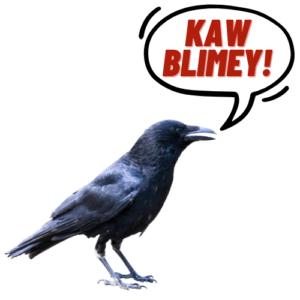
The title sequence, for example, hints at the terrors to come as blurred, shadowy birds flap across the screen, with the opening credits becoming fragmented like they’re being pecked away. As for the film’s sound design, Hitchcock said: ‘We tried to make a soundtrack that was so complicated it would be like an audio-cubist picture.’ And few contemporary directors would show the same scant regard for their cast in order to achieve the required results. When mechanical birds failed to work in one scene, lead actress Tippi Hedren had to endure the rigours of having live ravens hurled at her. What filled the screen in The Birds was described as an ‘apocalyptic poem’ by Hitchcock’s fellow cinematic genius Federico Fellini. When talking about the film’s powerful symbolism, Hitchcock concurred. ‘The birds are the harbingers of doom,’ he said. ‘They represent all the evil in the world and they’re coming to punish mankind for its sins.’
The futility of a new version of The Birds taking flight seems reinforced by the name that has occasionally hovered around such a project. Michael Bay. I find his films shallow, cold and incredibly messy. Nevertheless, with there being no likelihood of a remake getting within a wandering albatross’s wingspan of the artistry contained in Hitchcock’s vision, the CGI-blockbuster route has to be the one to follow. Ideally with someone other than Bay at the helm, a streaming giant like Netflix could throw the required money at the project like ravens being chucked at Tippi Hedren. Enraged eagles and fucked-off falcons could do battle with whatever defences humanity can muster. We’ve already seen the damage one coked-up bear can do and there are approximately six birds for every person on the planet. We wouldn’t stand a chance. I can see the poster now… ‘The Birds: A Nestflix Pecktacular!’