The Incredible Hulk (1977-1982)
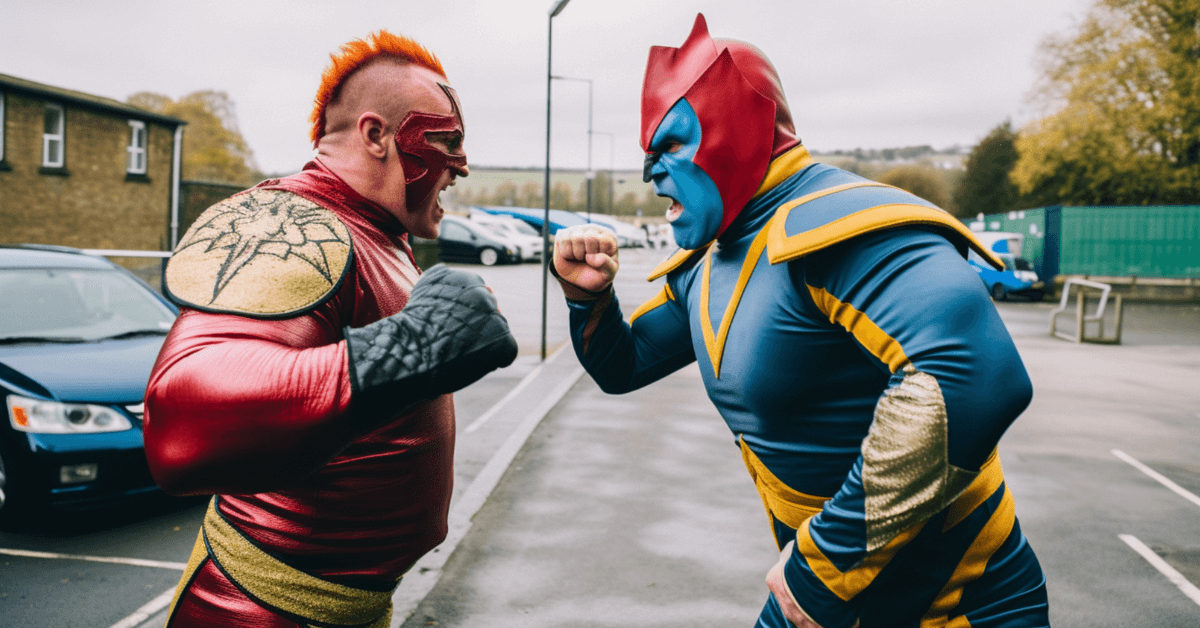
Made in a pre-CGI age, it’s unfair to condemn The Incredible Hulk for its low-grade action scenes. When the jade giant clashes with Thor onscreen these days, the sense of unleashed power is palpable as these two forces of nature come together in cataclysmic combat. In this TV show, it was like watching a couple of cosplaying wrestlers squaring up to each other in a pub car park. But when you don’t have an array of special effects at your disposal, you can’t blame the producers of The Incredible Hulk for making do with slow-motion camerawork and a few tins of green paint.
What they can be accused of, though, is being crazily over-ambitious. If there’s such a thing as an unfilmable novel, at that time The Incredible Hulk was an unfilmable comic book. On the pages of his monthly Marvel title, the Hulk would casually leap his way across continents, engage in intergalactic battles and twist tank turrets for fun. It wasn’t a particularly cerebral comic (that would come later, with explorations of PTSD and Jungian shadow selves) and it relied almost entirely on spectacle. Since the TV series couldn’t bring that to the screen, it always felt like it was falling short. So why tackle such barnstorming material when you don’t have the technology to do it justice? It was if someone had decided to remake the chariot race from Ben Hur at a supermarket roundabout. Or Apocalypse Now in Center Parcs.
The show might have pulled it off if it had stolen a march on the comic book and gone on a deep-dive into the lead character’s fractured psyche. Sadly, across 80 episodes and five TV movies, it seemed content to wallow in shallow sentimentality. While David Banner (played by Bill Bixby) traipsed across the States and had a series of dreary, drama-by-numbers encounters, Lou Ferrigno in bulked-out emerald form didn’t even get to speak. Any opportunity for character development was tossed out of the window like one of the Hulk’s bad guys. And watching him lift papier mache rocks or smash up a balsa wood garage every week was as exiting as watching green paint dry. ‘Bah! Hulk smash puny TV show!’
Gotham (2014-2019)
Like the majority of superheroes, Batman is defined by his rogues gallery. Many of them are dark reflections of his best qualities. The obvious example is The Joker, who seeks to bring chaos while Batman endeavours to keep order. The Dark Knight’s foes give him purpose – and vice versa. Several of them were even inspired to commit their evil deeds as a reaction to what he represents. Indeed, a sizeable part of the burden Bruce Wayne carries is that his decision to dress as a creature of the night and strike fear into the hearts of criminals has motivated some psychopathic minds to do the same.
While Batman isn’t entirely absent from the Gotham series, to all intents and purposes he is. Appearing only as a child and in an all-too-brief flash forward, over the course of the show’s five seasons he never reaches the symbol-of-hope status required to give Gotham’s freaks someone meaningful to bounce their villainy off. There appears to be a Rosencrantz and Guildenstern complex coursing through the veins of Batman-related TV shows. With such a rich selection of characters, it’s understandable why creators would want to explore the earlier life of Batman’s butler Alfred in the series Pennyworth or the crimefighting activities of his costumed allies in the more recent Gotham Knights. However, those creators aren’t Tom Stoppard and, when the character who’s the beating heart of everything is absent, after a while something is rotten in the city of Gotham.
Iron Fist (2017-2018)
When Marvel let Netflix have a play in its sandbox and make shows about some of the House Of Ideas’ street-level superheroes, the results were mixed. Daredevil, Jessica Jones and The Punisher were excellent. Iron Fist wasn’t.
The. Pacing. Was. Painfully. Slow. And even worse, it was uneven. A dramatic fight would ensue with a group of ninjas buzzing around like flies and our hero leaping through the air acrobatically and swords swishing and people getting kicked in the head and others parrying blows with their forearms and Iron Fist calling upon his mighty dragon punch to make an entire block shake with the force of his blow. And then we would cut to two people talking in a room. And they would talk. And talk. Often they would talk about things that had been discussed a million times before in previous episodes. During their tedious dialogue, the plot could have crawled off and died in a corner and they wouldn’t have noticed until they started choking on the noxious fumes of its decomposing corpse.
Scenes like this were presented with such earnestness, it felt like they had to be leading up to a pivotal moment. For example, Iron Fist (a long-lost member of the wealthy Rand family – it rhymes with bland) and his partner Colleen decide to invite a character called Davos to their place for dinner. There’s been clear tension between the three of them, so the pair debate whether the soiree is a bad idea. They prepare the meal (in the time it takes them to make it, contestants on Ready, Steady Cook could have organised a banquet), still wondering if it’s a bad idea. Then we see the dinner party itself. Guess what? It was a bad idea. But not in a way that really mattered or spun events off in an interesting direction. There was such an unrealised sense of portentousness, you’d be forgiven for thinking the scene might exist on an elevated plane akin to when Robert De Niro’s cop and Al Pacino’s criminal met for the first time in Heat. But no. There was just a meal and people bickered a bit.
Marvel’s Inhumans (2017)
A super-powered race who live on the Moon. A gigantic, teleporting dog with an antenna on its head. An exciting cast of up-and-coming actors. Despite all this, Marvel’s Inhuman was deathly dull.
The problem was compromise. The show was originally intended to be a part of the Marvel Cinematic Universe, but ended up being a television series instead. And even though the Inhumans have a proud comic book history, having been created by the Stan Lee and Jack Kirby dream team, there was a pervading sense they were being used as X-Men substitutes because the rights for Marvel’s mutants lay elsewhere.
These heroes also didn’t act in a noticeably heroic manner, spending much of their time bickering with each other and acting like entitled Karens. They looked down their noses at humanity and even their own lower orders – imagine The Crown, minus the relatability. The costumes were fucking terrible. And, similar to The Incredible Hulk, the Inhumans’ leader Black Bolt had an inbuilt dramatic disadvantage. He had to remain silent because, if he spoke, the power of his voice would destroy everything within earshot (another compromise, since in the comic books he had the ability to level a city with just a whisper, like Brian Blessed). This meant other characters had to spend half their time like Basil Exposition in the Austin Powers movies, detailing his thoughts and motives.
The Inhumans felt like a show that had given up before it began. Avoiding spoilers, though, subsequent revelations in the MCU mean that the lunar-based royal family may get another chance somewhere down the line.
Night Man (1997-1999)
I’m all for sidestepping the mainstream, but right from the start Night Man was an odd choice of character for a superhero show. On the printed page, he made his debut as part of the Ultraverse range of comics published by Malibu. He was later integrated into the Marvel Universe after the company bought Malibu, but never managed to rise above also-ran status. So it’s safe to say not too many people were clamouring for a Night Man TV series.
San Francisco jazz musician Johnny Domino (played by Matt McColm) gained his powers after being hit by lightning in a freak cable-car accident, enabling him to ‘hear’ evil. This didn’t mean he had Ed Sheeran on repeat on Spotify, but rather that he could telepathically tune in to the frequency of bad guys’ thoughts. Unfortunately, Johnny’s newfound ability came with a major downside. He couldn’t sleep. (Actually, listening to Ed Sheeran may well have solved this problem.) It was the dream concept for any outlier comic book fans who thought, yeah, Batman is great, but he’d be even better if he played the saxophone.
While Night Man’s D-list superhero status played a large part in the show’s failure to ignite, there was also a clear lack of confidence in the character from the show’s makers. For the transfer to TV his powers got a major upgrade, thanks to tech that made him bulletproof, invisible, able to fly and see in the dark. That impressive arsenal made Johnny’s USP ability nigh-on irrelevant. What really stank the place up, though, was the show’s cheesiness. The opening credits honked like a badly tuned sax, with a montage of Joey Tribbiani-style smell-the-fart moments and a very Nineties notion of cool. You want more cheese? David Hasselhoff was in the first episode. Jerry Springer was in another. Donald Trump had a cameo and made America grate again.
At the end of the first series, the production shifted from the US to Canada. This led to several characters being written out of the show or being played by different actors, which was jarring to say the least. The cheese factor reached Stinking Bishop proportions when Manimal sidled by for a guest appearance. Manimal (played by Simon McCorkindale) was the titular lead of another show by Night Man’s producer Glen A Larson. (The only thing preventing that series from eclipsing all the ones here with its sheer awfulness is that it wasn’t based a comic book.) A shape-shifter who could transform into the animal of his choice – a bit like Jon Culshaw crossed with Noah’s Ark – Manimal joined forces with Night Man to take on, of course, Jack The Ripper. After two series of this nonsense, it was wisely decided to call it a night.
Swamp Thing (2019)
Not to be confused with the 1990 series of the same name, this may be a controversial choice because the show was a big hit with fans and its cancellation was seen by many as yet another demonstration of DC’s inability to manage its comic book properties well. But Swamp Thing is an example of a show with a character who has almost limitless potential and gets reduced down to one thing.
Imagine the production meeting…
Executive One: ‘Guys, we have this character who’s like a scary god. He’s connected to and can control all plant life on Earth and other planets. He can manifest himself within any living thing. He can envelop a city in vegetation with just a thought. He can enlarge his brain to solve a problem. He can shrink to a microscopic level or hold the entire world in his hands. He can clone himself as many times as he wants. He’s pretty much indestructible and he’s immortal.’
Executive Two: ‘Scary? Hmmmm….’
Swamp Thing had a lavish budget and handled its gothic horror elements well, but if it had developed the lead character in more robust way the potential for growth may have been apparent to those execs and it could have avoided early cancellation (it lasted just 10 episodes). Alan Moore’s classic stint writing the comic in the Eighties was a gateway drug for many into how high the medium could aim. Horror themes were a key part of that, but they were a bridge to other concerns and not an end in themselves. Swamp Thing the TV series is included here mainly for reasons of frustration because, if it hadn’t imposed genre restraints on itself, it might have stuck around longer and fulfilled its potential.
The Amazing Spider-Man (1977-1979)
Decades before Marvel started making their own bankable movies and TV series, they sold the intellectual rights of their characters to all and sundry. This CBS adaptation of the costumed wallcrawler’s adventures was so dire, not even Marvel’s perennial cheerleader Stan Lee could raise a pom-pom to support it. ‘The Spider-Man TV series I was very unhappy with,’ he said. ‘I felt the people who did the live-action series left out the very elements that made the comic book popular. They left out the humour. They left out the human interest and personality and playing up characterisations and personal problems.’
An essential part of Spider-Man’s comic book DNA is the sage advice Peter Parker’s Uncle Ben passed down to him: ‘With great power there must also come great responsibility’. OK, Ben nicked a First Century adage and passed it off as his own, but it was a significant factor in Spidey’s mission to fight crime. The Amazing Spider-Man series didn’t just ditch those words of wisdom – it cut Uncle Ben out completely. Spider-Man was left like a car without an engine. A Hitchcock movie without a MacGuffin.
The members of Spider-Man’s rogues gallery – second only to Batman’s – were conspicuous by their absence too. As were vital supporting characters like J Jonah Jameson, Gwen Stacey and Mary-Jane Watson. It’s a wonder the show’s makers didn’t go even further and scrap the entire concept of their eponymous hero having the proportionate strength of a spider. They could have let him get bitten by a radioactive yak, stuck him in an old fur coat and saved on the costume budget. Although, considering the baggy, ill-fitting Spider-Man outfit the show’s star Nicholas Hammond did wear, that would only have recouped about a tenner.
Main image ©Tellyology.com